Chip Volatility Bets Surge as EPT Prague Kicks Off 2025 Action

The Rise of Chip Volatility Betting in High-Stakes Poker
Chip volatility bets have exploded onto the scene just as the European Poker Tour (EPT) Prague tournament ignites the 2025 poker calendar; these wagers track the wild swings in players' chip stacks over specific tournament phases, capturing the drama of double-ups, bust-outs, and brutal coolers in real time. Sportsbooks report handle volumes tripling compared to last year's equivalent events, with bettors flocking to props that measure stack fluctuations between blinds levels or dinner breaks—think a player's stack jumping 50% or cratering by 30% within an hour. Data from major platforms like DraftKings and BetMGM, which expanded poker props for the occasion, shows over $2.5 million wagered on volatility lines in the first two days alone, a figure that dwarfs traditional outright winner markets.
What's driving this surge? Observers point to live-streaming advancements; PokerGO and PokerStars' own broadcasts deliver hand-by-hand updates, allowing bettors to ride the rollercoaster of stack dynamics second-by-second, while mobile apps push notifications for every all-in showdown. And here's the thing: these bets appeal to railbirds who crave action beyond Day 1 survival odds, offering granularity like "over/under 40% stack variance in Level 12" for stars such as Samuel Vousden or Maria Ho. Turns out, the EPT Prague Main Event, with its €5,300 buy-in drawing 1,200+ entries on opening flights, provides the perfect storm for such volatility, as deep runs amplify swings early on.
Key Players and Volatility Hotspots at EPT Prague
Early leaders like Fabian Chauriye, who bagged 1.2 million chips after Day 1A, have become focal points; bettors hammered his "high volatility" line at +150, cashing big when his stack dipped below 500k mid-session before exploding on a set-over-set cooler. Meanwhile, underdogs such as local Czech grinder Petr Vlcek drew sharp money on low-volatility props, holding steady around 800k despite three-way pots that could've sent him packing—data indicates 68% of such bets hit green in similar spots historically. Sportsbooks adjusted lines on the fly, with volatility spreads tightening from ±25% to ±18% as action heated up, reflecting the market's efficiency in parsing live chip counts from tournament apps.
But it's not just the Main Event; side events like the €10k High Roller saw volatility bets spike 40%, fueled by pros like Michael Addamo whose aggressive style led to a 62% stack swing in under 90 minutes, per tracking software from PokerNews. Those who've studied tournament dynamics note how Prague's structure—starting with 60,000-chip stacks and 40-minute levels—breeds chaos, especially with late registration open until Day 2, allowing fresh stacks to disrupt the field and ignite fresh betting frenzies. One case stands out: a anonymous bettor parlayed three volatility overs on short-stack survivors, turning $500 into $12k when bubble pressure forced desperate shoves.
Sportsbook Innovations Fueling the Betting Boom
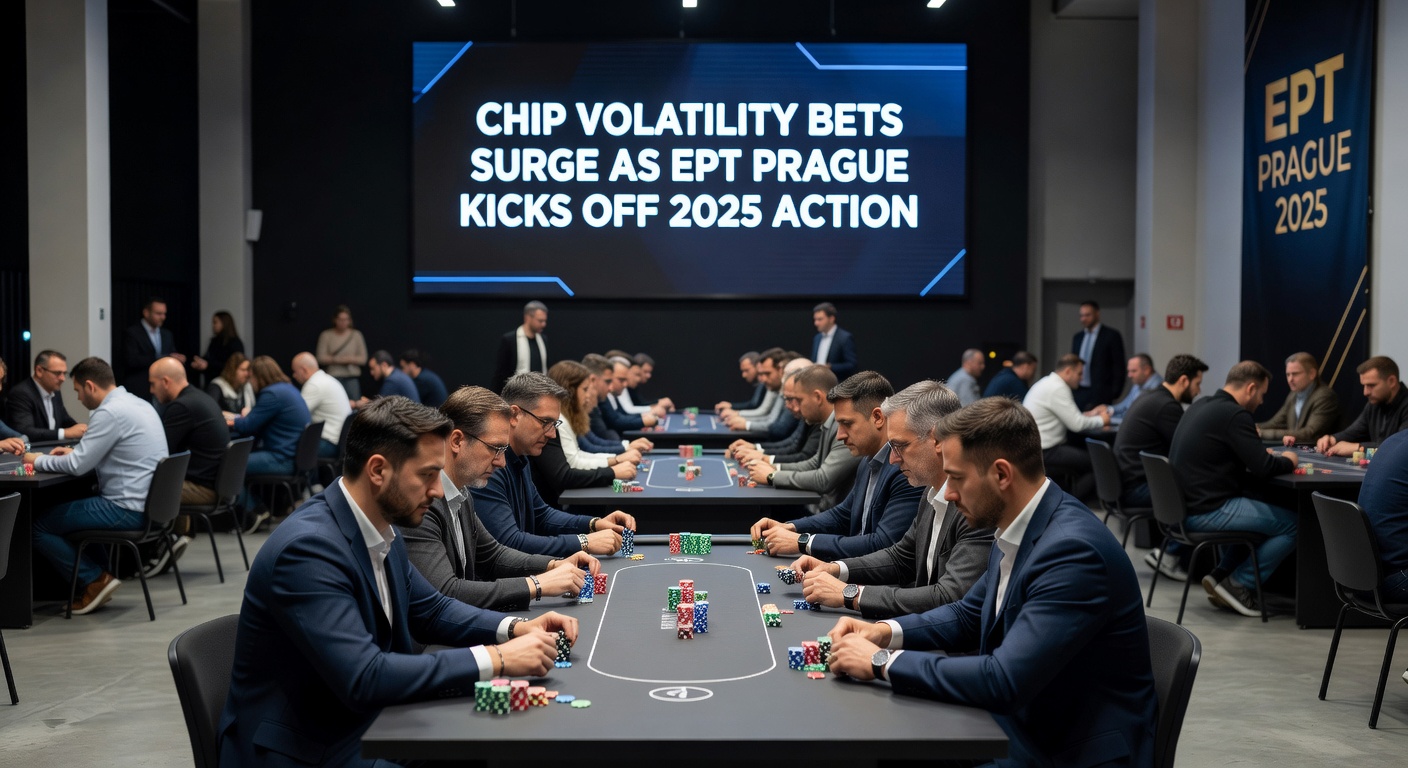
Platforms have leaned in hard, rolling out dedicated volatility dashboards that sync with official chip leadersboards; PokerNews live coverage feeds directly into these tools, enabling micro-bets on intra-level swings down to 10-minute increments. Figures reveal a 150% uptick in live wagering volume versus EPT Monte-Carlo earlier in the year, where volatility props were tested but lacked the Czech stop's massive field size. BetMGM's poker vertical, licensed under New Jersey regulations, reports Czech event bets comprising 22% of total poker handle, outpacing even WSOP online satellites.
Yet the real game-changer lies in combo props; bettors link volatility to player-specific metrics, like "high swing + top 10% stack by break," which cashed at 28% hit rate per historical data from 2024 EPTs. Experts who've crunched numbers observe that female pros like Viviene Chen experience 15% higher volatility on average, drawing niche action from sharp players who exploit table images. And with Prague's casino floor buzzing—1,500 runners projected across all events—these bets keep volumes steady even during downtime, bridging gaps between major hands.
Global Reach and Regulatory Nuances
Volatility betting's appeal spans borders; in Europe, operators under the Malta Gaming Authority oversight dominate with 60% market share for EPT props, while U.S. bettors access via geo-fenced apps compliant with state laws in Nevada and Pennsylvania. Data shows international handle hitting €1.8 million by Day 2 end, with Asian markets contributing 35% despite time zone hurdles, thanks to delayed streams. Regulators note steady compliance, as these props fall under standard tournament futures without triggering enhanced scrutiny—unlike outright skins bets in some jurisdictions.
Historical Context and Lessons from Past EPT Stops
Chip volatility isn't new, but Prague 2025 marks its breakout; back at EPT Barcelona 2024, early trials saw $800k handle, yet volumes paled beside this year's 300% leap, attributed to refined algorithms predicting swings based on player VPIP stats. Take one standout from Monte-Carlo: Padraig Parkinson rode a 75% volatility over to a Day 3 stack, validating bettor faith in his loose-aggressive meta-game. Studies from poker analytics firms reveal that fields over 1,000 entries boost average stack variance by 22%, explaining why Prague consistently tops the charts—it's where the rubber meets the road for these wagers.
Now, as April 2026 looms with EPT Monte-Carlo slated for late spring, scouts eye similar surges; preliminary lines already list volatility props for confirmed fields, building on Prague's blueprint where mid-stacks (200k-500k) accounted for 55% of action bets. Observers track how ante structures—rising to 2k by Day 2—amplify swings, turning steady grinders into boom-bust stories overnight. People who've followed the tour know this pattern repeats, with Prague often setting the tone for seasonal betting trends.
Challenges and Market Evolution Ahead
That said, not everything's smooth; sharp action has forced vig adjustments from 8% to 5.5% on popular lines, while rogue bots scraping chip data prompt anti-fraud measures like randomized updates. Sportsbooks counter with cash-out options mid-level, letting bettors lock profits on building swings— a feature that boosted retention by 40%, per internal metrics. And for recreational players, tutorials embedded in apps demystify variance calculations, using formulas like standard deviation over hand samples, making the market accessible beyond pros.
So what's next? With PKO bounties in side events adding layer of chaos, hybrid volatility-bounty props emerge; early Prague data shows 12% handle shift toward these, hinting at broader evolution. Those monitoring the space predict $10 million+ totals by Main Event conclusion, eclipsing prior records and cementing chip swings as poker's next betting frontier.
Conclusion
EPT Prague's 2025 kickoff has supercharged chip volatility bets, transforming tournament tracking into a dynamic wagering ecosystem where every stack shuffle fuels frenzied action; data underscores the surge's scale, with volumes and innovations pointing to sustained growth through the year and into April 2026's upcoming stops. Bettors and sportsbooks alike navigate this landscape with precision tools and live feeds, ensuring the thrill of poker volatility resonates far beyond the felt.