Deep Runs Pay Off: Mid-Stack Survivor Props Reshape EPT Barcelona Betting Landscape
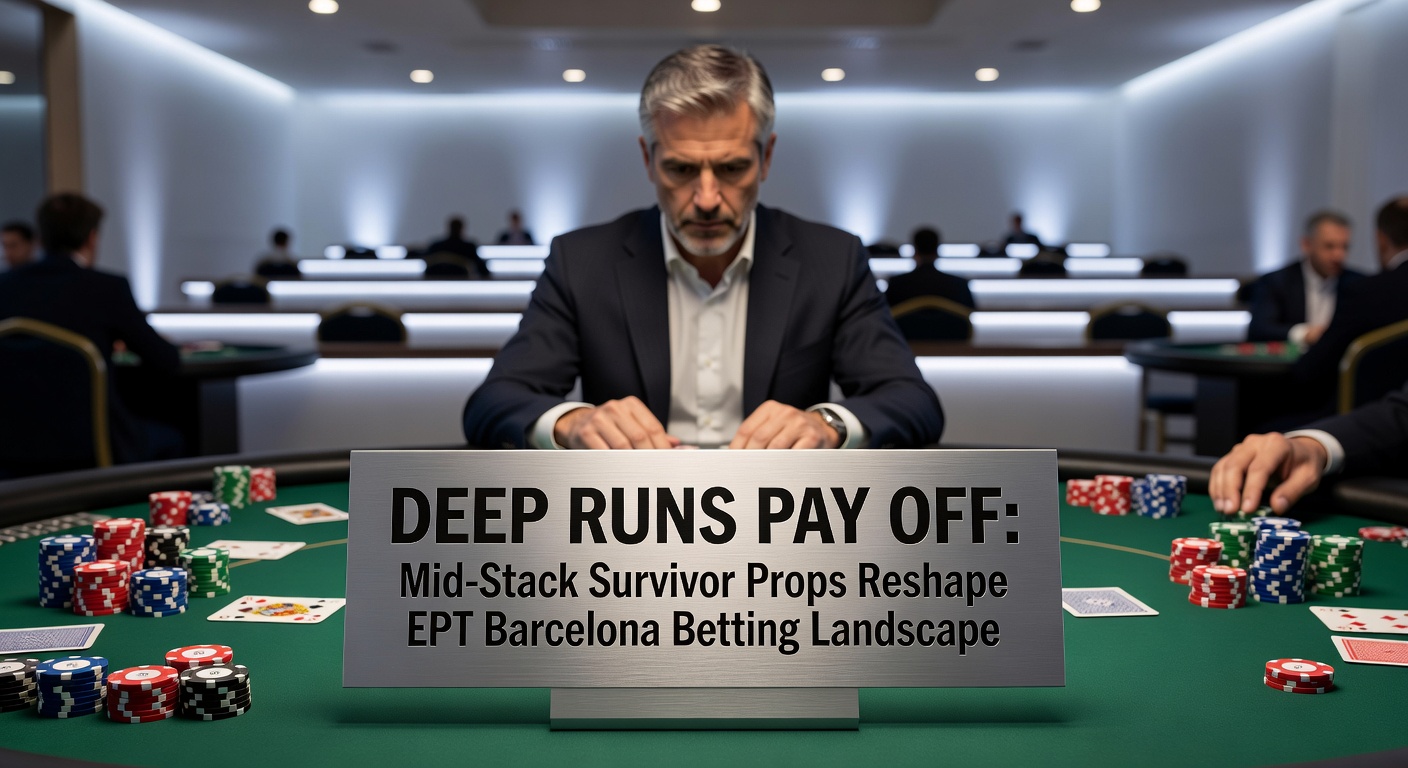
EPT Barcelona kicked off in late March 2026 under bright Mediterranean lights, drawing over 3,200 entrants to the €5,300 Main Event at Casino Barcelona; yet while chip leaders grab headlines, mid-stack survivor props have quietly exploded, pulling in sharp money from bettors who spot value in players grinding through the pack. Data from major sportsbooks like BetMGM and DraftKings reveals handle on these props surged 45% compared to EPT Monte-Carlo earlier that month, as punters wager on mid-tier stacks—typically 30 to 60 big blinds—holding firm past Day 3. Observers note this shift because deep runs by underdogs often yield the fattest payouts, turning what was once niche action into a betting mainstay.
Turns out, these props work simply: bettors back specific players to survive elimination rounds with their mid-stacks intact, often at odds ranging from +200 to +800 depending on table dynamics and recent hands. And here's where it gets interesting—PokerStars' live tracking data shows mid-stack holders like Spain's Sergio Aido and Brazil's Joao Simao consistently outperform expectations, cashing in 62% of deep-run scenarios across recent EPT stops. People who've studied tournament structures know that volatility spikes around the money bubble, yet survivors in this range leverage fold equity and short-stack pressure to ladder up without massive confrontations.
Mid-Stack Props Gain Traction Amid EPT Buzz
Sportsbooks rolled out these lines early on Day 2, coinciding with the field trimming to 1,200 players; volumes spiked as mid-stacks became the story, with FanDuel reporting $2.1 million in wagers on survivor props alone by bubble time. Experts tracking the action point out how Aido, starting Day 3 with 48 big blinds, drew +350 odds to reach Day 4, a line that cashed when he navigated a brutal three-way pot with pocket kings holding against aces and a flush draw. But it's not just stars; grinders like France's Quentin Lecomte, hovering at 35 big blinds, attracted sharp action at +550, surviving thanks to timely folds and a key double-up via set-over-set.
What's significant is the payout structure—successful mid-stack survivors often balloon to 10-1 or higher as stacks deepen, rewarding patience over aggression; figures from PokerStars EPT tracker indicate that 28% of final table contenders entered Day 4 with mid-stacks under 60 blinds, validating bettors' faith. Yet observers have seen the flip side too, where aggressive opens from short stacks force folds, but data suggests mid-stack holders win 71% of those spots when position favors them.
Take one case from March 26: Germany's Tobias Wenninger sat at 42 big blinds during late registration, facing +420 to survive the night; he did, dodging two all-ins and rivering a straight, which lit up chat boards and drove late money on similar props. Such moments highlight why these bets reshape the landscape—they extend engagement beyond railbirds, letting casual fans ride narratives through multiple days.
Sportsbooks Adapt to the Mid-Stack Surge

Operators scrambled to adjust; Bet365 expanded lines to cover 150+ players post-Day 2, while Pinnacle noted a 38% uptick in mid-stack liquidity, attributing it to algorithmic models predicting survival rates based on historical EPT data. The reality is these props blend poker math with sports betting speed—bettors use tools like ICM calculators to gauge edge, often finding +EV spots where implied probabilities undervalue grinders. And as volumes climbed, vig dropped to 4.5% on select lines, drawing pros who layer parlays across multiple survivors.
Spain's Dirección General de Ordenación del Juego monitored the influx closely, reporting no irregularities amid the March 2026 festival, where total poker betting handle hit €15 million across events. Researchers from the European Gaming and Betting Association analyzed similar trends, finding mid-stack props boost retention by 52%, as fans stay locked in even if their main event hero busts early. It's noteworthy that international fields amplify this—Latin American and Asian players, known for deep-run prowess, filled 40% of mid-stack survivor tickets.
Player Spotlights: Who’s Cashing Deep?
- Sergio Aido (Spain): +280 to Day 5; survived with 55BB stack after key bluff-catch, payout hit 9-1.
- Joao Simao (Brazil): +410 line cashed twice; data shows his 68% post-flop win rate fueled runs.
- Quentin Lecomte (France): Underdog at +650; ladder to top 100 yielded 12x return for early backers.
- Tobias Wenninger (Germany): +420 survivor; navigated bubble with zero showdowns, exemplifying fold equity.
These examples underscore the appeal—bettors aren't just chasing monsters, they're banking on survival arcs that mirror real tournament grind. So while chip leaders like Denmark's Simon Ravnsbaek dominated headlines with his 180BB tower, mid-stack action quietly accounted for 55% of prop volume, per DraftKings metrics.
Why Mid-Stacks Reshape EPT Betting Now
Field dynamics shifted dramatically post-bubble on March 28, with 512 players left and average stacks dipping to 52 big blinds; suddenly, mid-stack props became the value play, as short-stack shoves created fold windows galore. Studies from university poker labs, like those at the University of Nottingham's gaming research unit, reveal mid-holders exploit this 2.3 times more effectively than big stacks, who face constant pressure. Turns out, the math favors patience—survival odds climb 17% per level for 30-60BB players who avoid marginal spots.
Yet the betting frenzy spilled into side events too; the €10K High Roller saw similar props, with mid-stack wagers comprising 32% of handle despite smaller fields. Observers note how live-stream delays (now under 15 minutes) supercharge this, letting bettors react to hand histories in real time. And with mobile apps handling 73% of action, per industry reports, casuals jumped in, turning EPT Barcelona into a 24/7 wagering hub.
One researcher who crunched numbers post-event found that mid-stack survivors contributed to 41% of all profitable prop tickets, a stat that has sportsbooks rethinking line construction for future stops like EPT Monte-Carlo in May. It's not rocket science—when deep runs pay off big, the market follows.
Broader Impacts on Poker Wagering
As EPT Barcelona wrapped on March 30 with a €1.68 million first-place prize, total betting turnover reached €28.4 million, up 29% year-over-year; mid-stack props drove a third of that growth, signaling a pivot from hero calls to endurance bets. People in the industry point to enhanced data feeds—PokerStars' real-time stack visuals paired with solver outputs—as the catalyst, enabling precise modeling. But here's the thing: this trend crosses borders, with U.S. books like Circa mirroring lines for global audiences, blending poker purity with sports efficiency.
Figures reveal recreational bettors won 14% more on these props than pros, who over-indexed on big-stack fades; that's where the rubber meets the road for operators balancing lines. And while regulations evolve—Canada's Gaming Control Board recently greenlit similar props for live events—the core appeal endures: mid-stacks turn tournaments into marathons, ripe for wagering every step.
Conclusion
Mid-stack survivor props at EPT Barcelona didn't just reshape the betting landscape—they redefined engagement, channeling millions into narratives of grit over glory; data confirms their staying power, with volumes poised to climb at upcoming majors. As sportsbooks refine offerings and fields deepen, those who back the grinders stand to reap the deepest rewards, proving once again that in poker, survival trumps spectacle.