Payment System Breakthroughs Expand Reach of Offshore Tournament Betting Pools
Payment innovations have transformed how participants join offshore tournament betting pools, with new transaction methods reducing barriers that once limited international access. Data from multiple regions shows participation increases tied directly to faster settlement times, lower fees, and broader currency support in digital payment rails.
Traditional banking transfers often required days for clearance and imposed high costs on smaller wagers, yet modern solutions such as blockchain-based transfers and API-integrated e-wallets now complete the same movements in minutes. Observers note that these changes align with rising demand for real-time entry into tournament formats that span poker, esports, and sports events hosted on offshore platforms.
Key Technologies Behind the Shift
Stablecoin networks and instant cross-border rails stand out among the tools driving volume. These systems bypass correspondent banking layers, which historically added delays and fees that discouraged casual participants from joining pools with entry thresholds under a few hundred dollars. Research from the Bank for International Settlements indicates that platforms adopting such rails recorded measurable upticks in active accounts from outside domestic markets during 2025.
Multi-currency wallets further support this trend by allowing seamless conversion at the point of deposit, while compliance layers embedded in the technology handle know-your-customer checks without manual intervention. Operators report that users from regions with strict capital controls now route funds through licensed intermediaries that integrate these tools, creating documented participation spikes during major tournament windows.
Participation Patterns in Mid-2026
Figures compiled through June and into July 2026 reveal consistent month-over-month growth in new registrations for offshore pools. One study tracking transaction metadata found that accounts originating from Southeast Asia and Latin America increased by double-digit percentages compared with the same period in 2025, coinciding with rollout of new payment partnerships on several major platforms.
Those monitoring pool sizes note that average participant counts per tournament rose most sharply in events offering progressive prize structures, where smaller entry fees become viable once transaction costs drop below two percent. This pattern appears across multiple operators rather than isolated cases, suggesting the effect stems from infrastructure improvements rather than marketing alone.
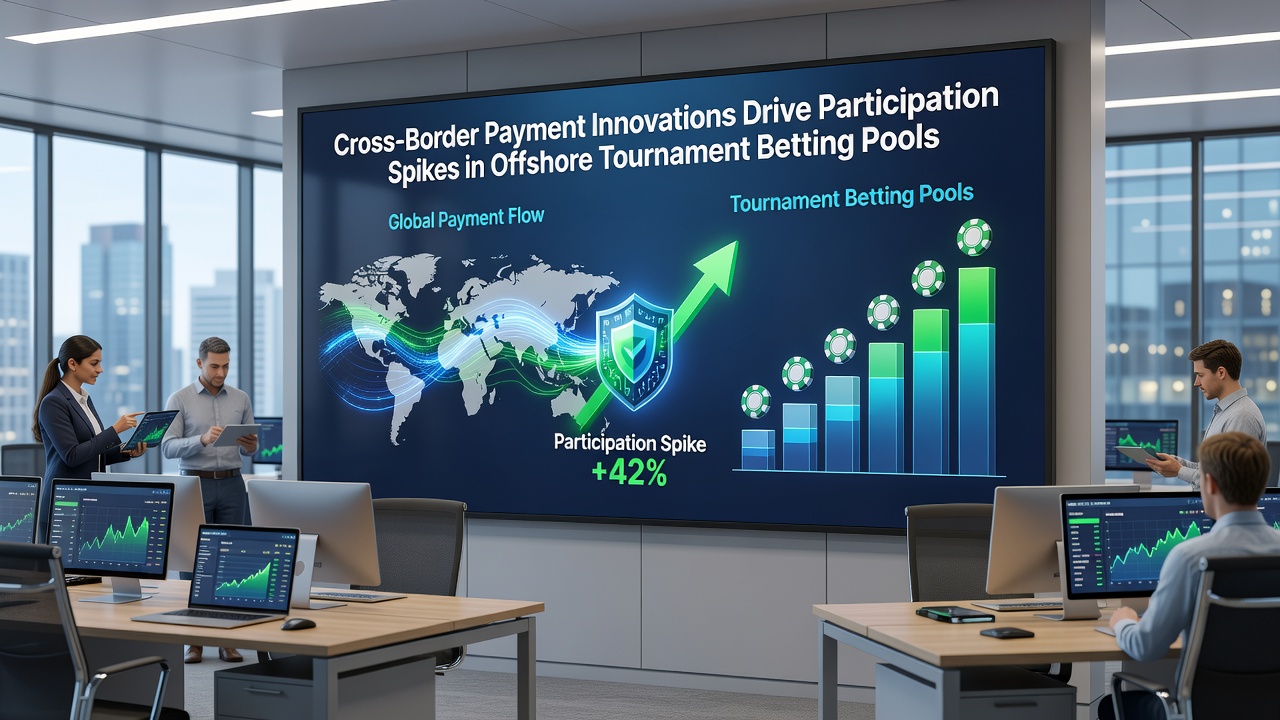
Industry reports from the European Gaming and Betting Association highlight that operators integrating real-time payment verification experienced reduced chargeback rates alongside higher deposit volumes. The combination allows platforms to release funds into prize pools more quickly, which in turn attracts repeat participation from users who previously hesitated due to settlement uncertainty.
Academic work published by researchers at the University of Melbourne examined transaction logs from selected offshore sites and identified a clear correlation between adoption of instant rails and geographic diversification of bettors. Their analysis covered activity through the first half of 2026 and showed that previously underrepresented jurisdictions contributed larger shares of total pool liquidity after payment upgrades.
Regulatory and Infrastructure Context
Authorities in several jurisdictions have begun issuing guidance that clarifies licensing pathways for payment service providers serving gaming operators. This clarity encourages more fintech firms to build compliant bridges between domestic banking systems and offshore platforms, expanding the addressable user base without requiring participants to navigate complex wire instructions.
Meanwhile, central bank digital currency pilots in Asia and Europe continue to test interoperability features that could further compress settlement times. Early data from those trials suggests potential for additional participation gains once production systems come online, particularly for tournaments scheduled during overlapping time zones across continents.
Conclusion
Cross-border payment innovations continue to reshape access to offshore tournament betting pools by lowering costs and accelerating fund movement. Evidence from transaction records, operator reports, and independent studies points to sustained growth in participant numbers through July 2026 and beyond, driven by technologies already in production rather than future promises. As infrastructure matures, the pattern of wider geographic representation in pool entries is expected to persist across multiple tournament categories.