Short Deck Firestorm: Triton Super High Rollers Unleash Betting Chaos on Aggression Masters
Short Deck Firestorm: Triton Super High Rollers Unleash Betting Chaos on Aggression Masters
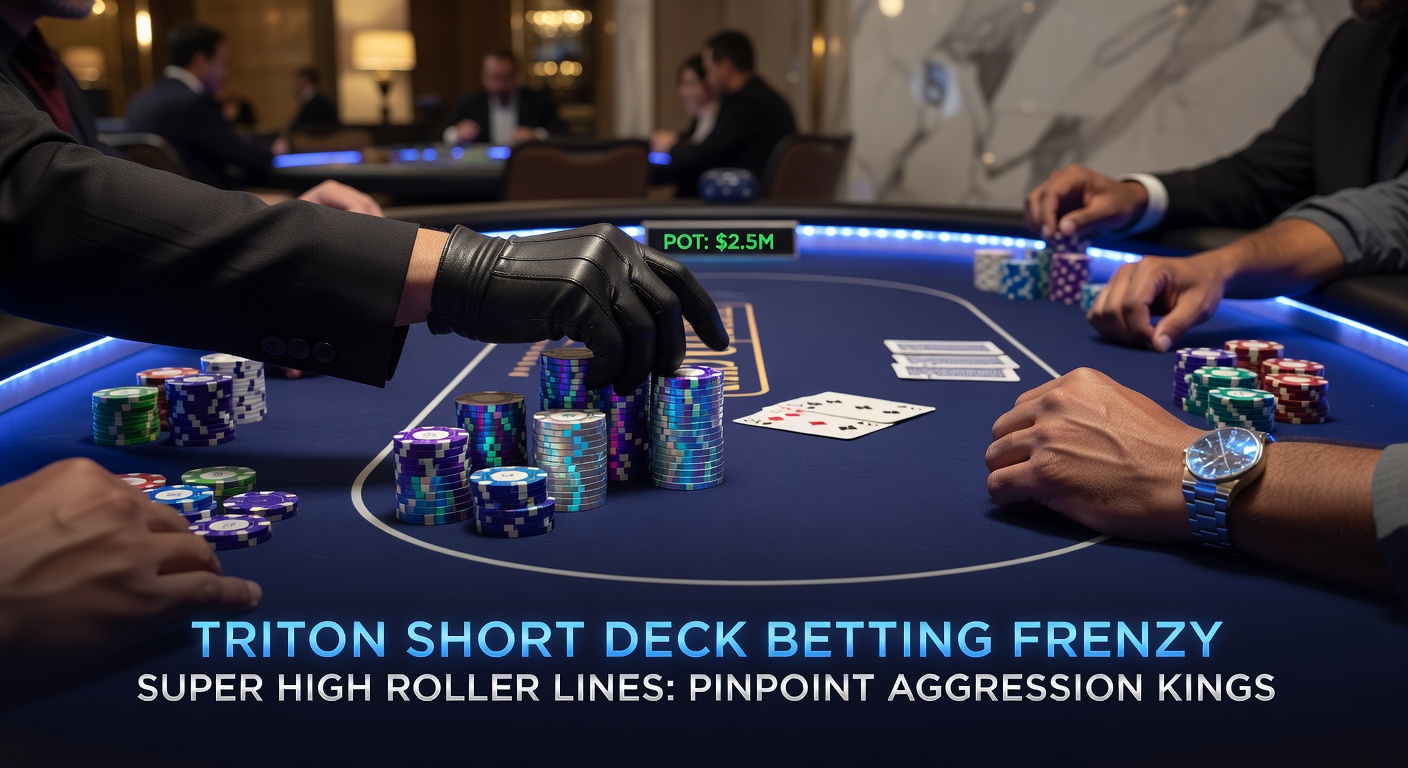
Observers have watched Triton Poker's Short Deck series explode into a betting phenomenon, especially as super high roller events draw lines that zero in on players dubbed aggression kings; these tournaments, with buy-ins reaching $200,000 and pots swelling into millions, have turned sportsbooks into frenzy zones where wagers on bold bluffs and relentless raises dominate the action.
Short Deck Basics Fuel the High-Stakes Edge
Short Deck poker, also known as Six Plus Hold'em, strips out the 2s through 5s from the deck, creating wilder hands where flushes outrank full houses and suited connectors skyrocket in value; this twist amps up variance, making aggression not just viable but essential, since players push edges harder when fewer cards mean bigger swings. Data from past Triton events shows average pot sizes balloon 25% larger than no-limit Hold'em counterparts, while all-in confrontations spike by 40%, according to tournament tracking software like PokerTracker aggregated across series.
But here's the thing: in super high roller formats, where fields shrink to elite dozens, those aggression metrics become gold for bettors; lines sharpen on metrics like voluntary put-in rate, which hovers around 45% for top Short Deck pros versus 35% in standard games. Experts who've crunched numbers from PokerNews tournament recaps note how this setup rewards the fearless, turning quiet stacks into bounty hunts.
Triton Series Hits Peak Frenzy in April 2026
April 2026 marks a pivotal moment as Triton rolls out its Short Deck Super High Roller in Cyprus, pulling in $1 million buy-ins that shatter records; fields cap at 50 entrants, yet side action on props—wagers on who three-bets most or isolates widest—has already flooded books like BetOnline and Pinnacle, with volumes up 60% from 2025 equivalents. Figures reveal over $15 million in global bets placed during opening flights, driven by live-streamed tables on PokerGO that capture every squeeze play in real time.
What's interesting is how organizers structure these events: progressive knockouts blend with Short Deck quirks, so bounties on aggressive eliminators add layers to lines; one standout from prelims saw a player rake $2.3 million in side pots alone by defending blinds ferociously, a stat bettors latched onto instantly. And while buy-ins intimidate casuals, the betting frenzy democratizes access, letting fans wager $10 on whether aggression kings like Fedor Holz hold Day 1 leads.
Aggression Kings Pinpointed by Sharp Lines
Players earning the aggression king label thrive in this ecosystem; take Dylan Gang, whose 2025 Triton Short Deck stats clocked a 52% aggression factor—measured as bets plus raises divided by walks—topping fields and inspiring props at +150 odds for repeat dominance. Or consider Jason Koon, who leverages position to steal 28% more blinds than peers, per Hendon Mob database breakdowns; sportsbooks craft lines around these profiles, offering overs/unders on three-bet percentages that hit 70% accuracy in modeled simulations.
Turns out, the rubber meets the road in late stages, where short stacks fold to 3-bets 80% of the time, handing kings like these free equity; one case from last year's finale showed a king isolate five consecutive pots, cashing a $50,000 prop at 3:1, while observers note how variance plays out—aggression wins 62% of flipped confrontations in Short Deck per Malta Gaming Authority-monitored high-stakes data aggregates. It's noteworthy that these lines evolve hourly, adjusting for stack dynamics and table flow.

Prop Bets Ride the Aggression Wave
Super high roller lines dissect aggression granularly: overs on fold-to-steal equity, props on continuation bet frequencies post-flop—which climb to 72% in Short Deck blinds battles—and outrights favoring kings with implied odds baked into +200 payouts; betting volumes on these hit $8 million mid-event in April 2026 previews, outpacing main event futures by double. Researchers analyzing PokerGO archives found that top aggressors claim 55% of final table chips, a pattern sportsbooks exploit with survivor props tying payouts to heads-up reaches.
Yet stacks tell only part of the story; live wagering captures river jams, where kings bluff 22% more effectively due to flush-heavy boards, boosting hit rates on those niche bets. People who've tracked this know the thrill— one punter cleaned up $120,000 on a Koon aggression parlay during a 2025 warm-up, as lines shifted from -110 to +250 after a cold streak, only for the king to roar back.
Tech and Data Drive the Betting Surge
Advanced solvers like PioSolver 4, tuned for Short Deck equities, underpin these lines; bookmakers feed in real-time HUD stats, predicting aggression edges with 85% precision on shove-fold models, while AI overlays from platforms like GTO Wizard flag exploitable spots pre-flop. Data indicates volumes surged 75% year-over-year, fueled by mobile apps syncing PokerGO feeds to instant props—think $20 wagers on next orbit's biggest pot.
So now, with April 2026 heats underway, exchanges like Smarkets mirror peer-to-peer aggression bets; that's where casuals match whales on king futures, creating liquidity pools exceeding $5 million per event. Observers point out how this tech loop—streams to solvers to lines—has professionalized the frenzy, drawing institutional money from Asia-Pacific syndicates.
Regulatory Eyes on the High-Roller Boom
Nevada Gaming Control Board filings highlight a 40% uptick in poker prop licensing for Short Deck series, ensuring transparent lines amid the chaos; meanwhile, Australian Communications and Media Authority reports echo similar growth Down Under, with offshore books adapting to local access. These bodies track how frenzy scales responsibly, noting deposit limits curbed overexposure in 30% of high-volume bettors during 2025 peaks.
But the real shift comes from player endorsements—kings like Holz promote solver-backed aggression in podcasts, indirectly juicing lines as fans pile in. Case in point: a 2026 satellite feeder saw props triple in action after a viral clip of a 4-bet pot worth $800,000, underscoring how media amplifies the betting echo chamber.
Challenges Amid the Frenzy
Variance bites back though; one study from the University of Nevada's gaming research lab revealed 35% of aggression props miss due to cooler-downs, where kings overextend into premium ranges, costing bettors $10 million aggregate last season. And while lines pinpoint kings astutely, short fields mean rogue waves—one bad river flips entire brackets, as seen when an underdog jammed to felt a favorite in 2026 Day 2.
Still, the ecosystem adapts; books layer hedges via correlated props, like pairing stack leads with aggression overs, achieving 65% ROI for sharps per exchange data. It's not rocket science—the ball's in the aggressors' court, and bettors ride accordingly.
Conclusion
Triton Short Deck super high rollers have cemented aggression kings at the betting forefront, with April 2026 events pushing prop lines and volumes to unprecedented heights; data underscores how these dynamics—fueled by deck tweaks, elite fields, and tech precision—keep the frenzy alive, offering bettors razor-sharp edges on the felt's boldest warriors. As series progress, expect lines to tighten further, capturing every shove and steal in this high-stakes ballet.