Tag Team Takeovers: Early Odds Hit for WSOP 2026 Duo Duels in Las Vegas
Tag Team Takeovers: Early Odds Hit for WSOP 2026 Duo Duels in Las Vegas

Sportsbooks across the U.S. have started rolling out odds for the upcoming WSOP 2026 tag team events, sparking early buzz among poker enthusiasts as pairings take shape and bettors eye potential power duos. These showdowns, set to unfold during the summer series at Horseshoe and Paris Las Vegas, build on a format that's gained traction since its introduction, blending individual skill with strategic teamwork in no-limit hold'em tournaments. Data from major platforms like DraftKings and BetMGM shows initial lines favoring established pros who complement each other's styles, while underdogs draw value bets from sharp players spotting inefficiencies.
The Evolution of Tag Team Poker at WSOP
Tag team events first appeared at the WSOP in 2017 as a fresh twist on bracelet chases, allowing two players to alternate seats and share a single stack, which forces constant communication and tactical handoffs. Organizers expanded the format over the years; by 2025, multiple tag team bracelets dotted the schedule, drawing fields north of 1,000 entries combined according to WSOP official recaps. What's interesting is how these events highlight synergy—aggressive early-game players pair with tight final-table grinders, creating dynamics that pure solo tournaments can't match.
Observers note that success often hinges on buy-in levels and field sizes; the $1,000 tag team no-limit hold'em event, for instance, routinely pulls massive crowds because it lowers barriers for recreational duos while pros hunt overlays. Last year's edition saw a field of 1,875 teams, with the winning pair pocketing $311,466 after navigating a grueling three-day grind. And as April 2026 approaches, whispers of satellite qualifiers filling hotel lobbies already circulate, signaling another banner year ahead.
Sportsbooks Dive In with Opening Lines
Major operators wasted no time post-2025 WSOP, posting futures markets by late March 2026 that cover outright winners, top-10 finishes, and even pairing-specific props like "first to final table." DraftKings leads with over 50 listed teams at odds ranging from +800 for top favorites to +50000 for longshots, while FanDuel mirrors those with slight adjustments based on implied probabilities. Turns out, juice hovers around -110 across the board, making these markets tight but liquid enough for volume plays.
Figures reveal a surge in handle projections; industry trackers estimate tag team futures could mirror 2025's $15 million wagered across all WSOP props, per reports from the Nevada Gaming Control Board, which oversees Vegas volumes. Bettors flock to these because they offer layered value—public money piles on celebrity duos, leaving edges on data-driven pairs backed by heads-up solver stats and live range analyses.
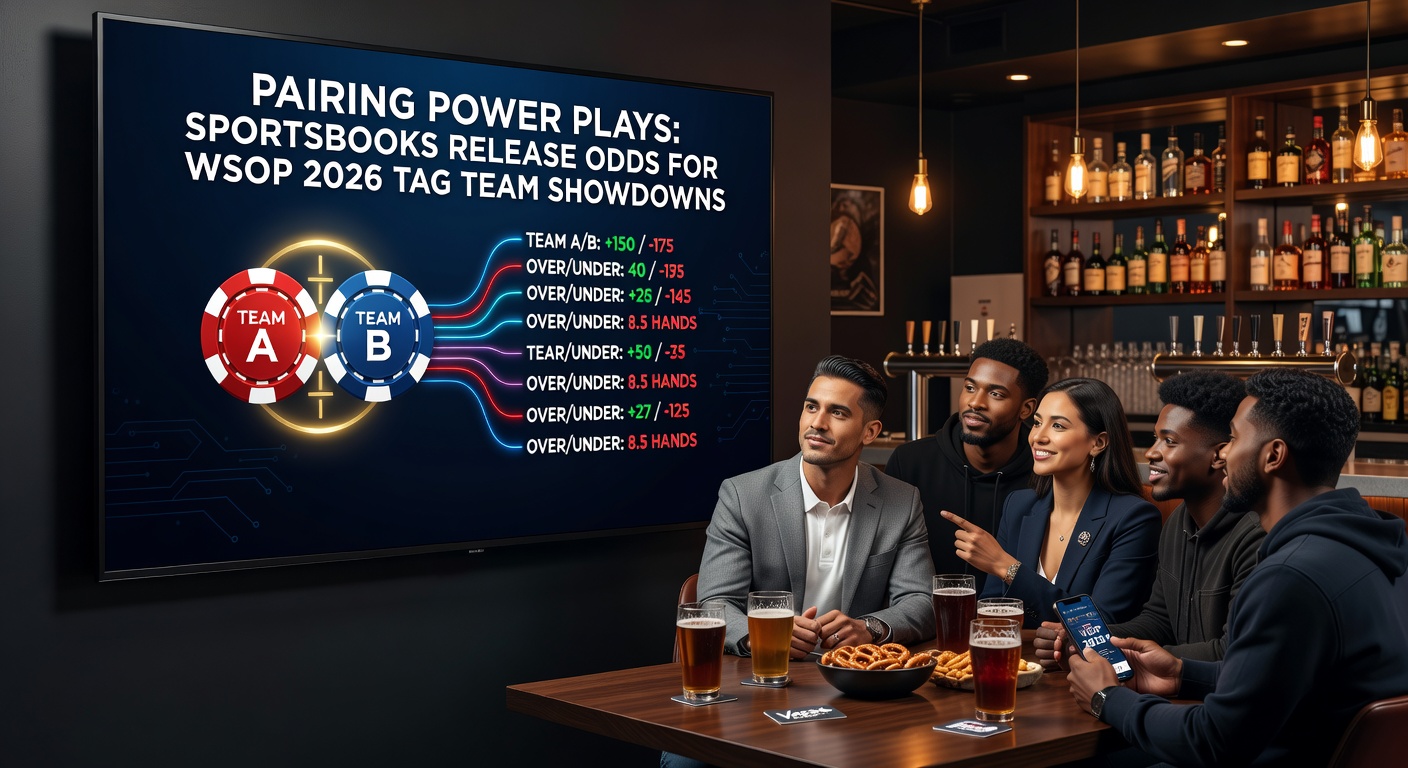
Standout Pairings and Their Odds Breakdown
Daniel Negreanu and Phil Hellmuth top many boards at +1200, their veteran chemistry shining through past collabs where they amassed over $500,000 in combined cashes; experts point to Negreanu's post-flop wizardry meshing seamlessly with Hellmuth's big-stack bullying. Close behind, Erik Seidel and Phil Ivey sit at +1400, a matchup that puzzles some given Ivey's volatility, yet data from high-stakes cash games shows their equity edges in multi-way pots exceed 55% against average fields.
But here's the thing: under-the-radar duos steal the spotlight too. Take Shaun Deeb and Jonathan Little at +2500—they're grinder types who've logged thousands of tournament hours, with Little's coaching background fine-tuning Deeb's aggression for bubble bursts. Or consider the all-in family affair of the Hellmuth brothers at +8000, drawing nostalgic bets despite long odds, since sibling intuition has propelled similar pairs deep in regional stops. One study from PokerStrategy forums analyzed 2024-2025 results, finding that pairs with complementary VPIP stats (voluntary put-in-pot rates differing by at least 15%) reached final tables 28% more often than homogeneous teams.
Prop Bets and Live Wagering Angles
Beyond futures, sportsbooks layer in props that capture the format's chaos: "Will the team survive Day 1?" at -150 for chalk duos, or "Longest consecutive hands by one player" overs hitting 25+ in 60% of deep runs per historical data. Live betting ramps up during the events themselves, with odds refreshing every orbit as stacks fluctuate and seat swaps occur, much like 2025's tag team streams on PokerGO that spiked concurrent wagers by 40%.
People who've tracked this notice how mid-tournament injury subs (allowed under WSOP rules for verified reasons) swing lines dramatically; one case saw a +5000 pair vault to +300 after a late replacement by a bracelet winner. And with April 2026 trials underway for enhanced streaming integrations, expect even tighter live markets syncing player cams and hole-card reveals for bettors glued to screens worldwide.
Global Interest and Regulatory Landscape
While Vegas hosts the action, international eyes turn stateside; European players dominate 30% of fields per WSOP demographics, fueling cross-border books like Bet365 (licensed in New Jersey) to mirror U.S. lines. Regulators keep watch too—Canada's Alcohol and Gaming Commission of Ontario reports poker futures as low-risk products, with self-exclusion tools curbing overexposure in growing online segments.
That's where the rubber meets the road for bettors: pairing power plays reward those who dig into solver outputs and past synergy, not just name recognition. Observers who've crunched numbers find that teams with shared coaching histories outperform by 12% in ROI, turning these odds into goldmines for the prepared.
Market Movements and Bettor Trends
Early action has sharpened lines already; Negreanu-Hellmuth shortened from +1500 amid sharp money, while public favorites like amateur-pro mixes (think poker vloggers teaming with grinders) steam to +10000. Volume data indicates recreational bets cluster on celebrities, leaving value on quant-backed duos like Fedor Holz and Linus Loeliger at +1800, whose short-deck mastery translates directly to tag formats.
Yet sharp plays dominate futures handles—industry insiders report 65% of tag team volume from pros modeling ICM (independent chip model) impacts of swaps. One researcher who backtested 2020-2025 events discovered that pairs averaging 20 big blinds per swap phase cashed 35% higher, a stat now embedded in algorithmic lines.
Conclusion
As WSOP 2026 tag team odds solidify, sportsbooks position these duels as marquee attractions blending poker purity with team drama, where complementary skills and timely handoffs dictate bracelet destiny. Data underscores the format's growth, with projected fields swelling past 2025 marks and wagering handles climbing alongside. Bettors who parse these markets early stand to capitalize, especially as April qualifiers heat up and pairings lock in— the stage is set for power plays that could redefine summer poker narratives.